Germany’s Wind Energy Paradox: Grassroots Hustle Meets Offshore Headwinds
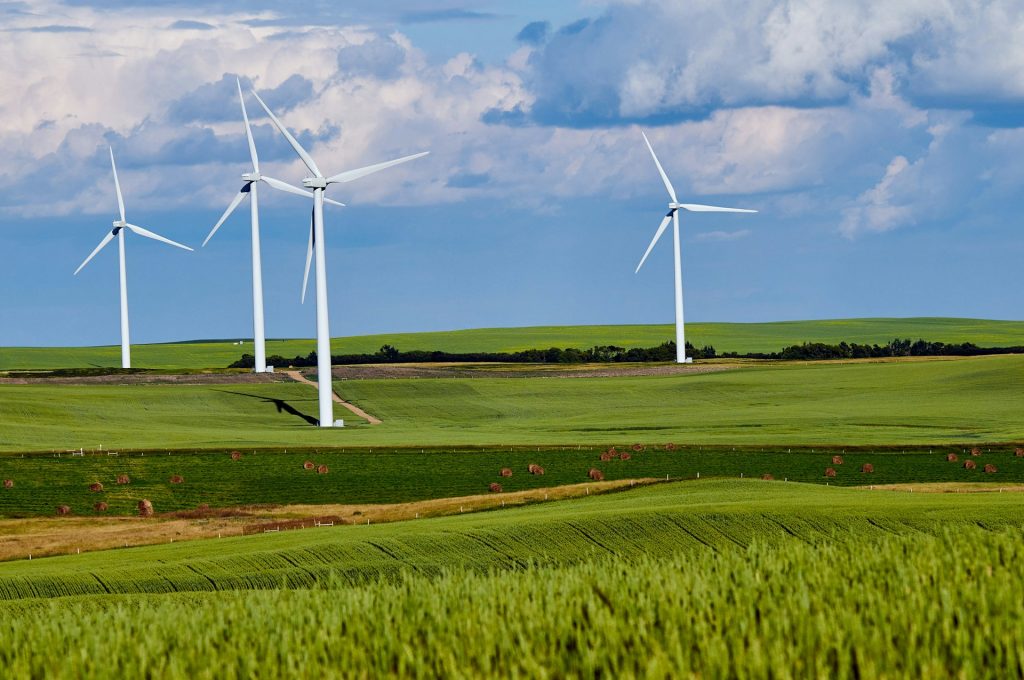
Let’s face it: getting Germany to run on 80% renewable power by 2030 is a massive heavy lift. Wind power is already the country’s bedrock electricity source, but with the grid hungry for more juice—thanks to widespread electrification, digitalization, and a boom in data centers—the build-out desperately needs to hit the gas. The legislative target is set at 115 gigawatts (GW) of onshore wind by 2030. However, we closed out 2025 sitting at just about 68 GW, and instead of the planned 7 GW of new capacity last year, only 5 GW actually came online.
Capitalizing on the Onshore Gap
Enter private capital and project developers trying to bridge that gap. The reconcept Group recently rolled out a new green bond, the “reconcept WindEnergie Deutschland I” (ISIN: DE000A460JX9), looking to raise up to €10 million. They’re offering a fairly sweet 7.25% p.a. coupon over a seven-year term, paying out semi-annually. The game plan is straightforward: buy up wind project rights primarily across northern and eastern Germany, get them to the ready-to-build stage, and flip them to third parties. They are also looking into integrating battery storage systems into these sites.
As reconcept’s Managing Partner Karsten Reetz noted, the regulatory headwinds are finally easing up. For instance, the new federal land requirements mandate that 2% of national land must be designated for wind energy by the end of 2032.
But it’s not just about breaking new ground. A huge piece of the puzzle is repowering. Christiane Kaufholt-Mecke, reconcept’s Managing Director, points out that roughly half of Germany’s wind turbines have been spinning for over 15 years. Swapping out those old clunkers for modern, high-hub turbines on the exact same footprint yields exponentially more power. It’s a highly efficient use of existing sites, and the numbers back it up: in 2025, repowering already accounted for nearly a third of all newly installed gross capacity.
Navigating the Local Bureaucracy
How does this onshore push actually play out on the ground? You have to look at the municipal level, where towns like Bretten are navigating a labyrinth of local politics to get wind parks built. Bretten is currently trying to fast-track a land-pooling process, though “fast-track” is relative here—the administration admits it will still take about five years before the first blades actually turn.
The local council meetings are a fascinating case study in small-town governance. At a recent session, Mayor Nico Morast and Deputy Mayor Michael Nöltner actually had to step down from the dais and sit in the audience. The reason was a classic conflict of interest: they, or their family members, own plots in the targeted wind zones. A handful of other council members had to recuse themselves for the exact same reason, leaving CDU faction spokesman Martin Knecht to run the show as a volunteer deputy.
Ultimately, the council voted 18-3 to throw the city’s own municipal land into the pooling mix alongside private owners, who hold about 41% of the designated areas. By doing this, the town secures a seat at the table when dealing with developers and ensures they get a fair slice of the financial pie. The only real pushback came from the AfD faction. They opposed the wind technology outright, though their spokesman Andreas Laitenberger clarified they didn’t have a problem with the pooling process itself. As CDU’s Joachim Leitz put it, wind energy might be a divisive topic, but shutting our eyes to the energy transition just isn’t an option anymore.
Cold Feet in the North Sea
While the onshore sector is grinding it out plot by plot, the offshore side—long hailed as the bulletproof pillar of the energy transition—is springing some serious leaks. Out on the high seas, the wind blows harder and more consistently, and the expansion targets are nothing short of colossal. But suddenly, the system is under intense pressure, and some heavy hitters are looking for an exit.
Reports from the NDR and Süddeutsche Zeitung recently revealed that energy titans like France’s TotalEnergies and the UK’s BP are looking to bail on their massive North Sea and Baltic Sea projects. We’re talking about serious real estate: TotalEnergies had locked down 7.5 GW of planned capacity, and BP scooped up over 4 GW. TotalEnergies brushed the reports off as mere “allegations” when pressed, but the writing seems to be on the wall.
What’s souring the deal? It’s a toxic cocktail of high interest rates, inflated construction costs, and a surprisingly jittery power market. Add to that the fact that widespread electrification isn’t moving quite as fast as the rosy projections from a few years ago. But the major sticking point seems to be the grid. Developers are sweating over whether the mainland grid connections will be ready in time to actually sell their power. Interestingly, grid operator Tennet pushes back hard on this narrative, insisting they’re on track and that some offshore connections might actually be ready before the wind parks are even finished.
Here’s the real kicker: the German offshore system is built for absolute commitment, not flexible pivots. Under the current Offshore Wind Energy Act, you can’t just hand back a lease if the math stops mathing. Miss your deadlines, and the Federal Network Agency can revoke the project and slap you with hefty contractual penalties.
The tension has reached a boiling point, prompting the Federal Association of Offshore Wind Energy (BWO) to actively lobby for an exit hatch. They want a new regulation that allows companies to voluntarily surrender their leases so the government can quickly re-auction them, potentially as early as 2027. According to BWO Managing Director Stefan Thimm, the changing economic realities are simply making final investment decisions too risky to stomach right now.
 Divergent Paths in Hydrogen: Bloom Energy Rides the AI Wave While the Rest of the Sector Scrambles
  Energy and Lubricants: Navigating a Shifting Global Landscape
  Market Watch: Tech IPOs Heat Up for 2027 as Flutter Adjusts US Strategy
  Novavax Struggles with High Volatility and Long-Term Value Decline
  Global Real Estate Brief: Institutional Moves in Spain and NYC Financial Snapshot
  Intel’s Resurgence: Apple Rumors and Hardware Leaks Fuel Market Comeback
  The Macro Setup: De-Risking the Supply Chain
  Germany’s Wind Energy Paradox: Grassroots Hustle Meets Offshore Headwinds