Energy and Lubricants: Navigating a Shifting Global Landscape
In the complex world of modern energy, two companies—Energy Fuels Inc. (UUUU) and the Saudi Aramco Base Oil Company (Luberef)—are charting distinct paths through a volatile economic environment. While one is deeply embedded in the American critical minerals race, the other finds itself at the heart of Saudi Arabia’s industrial transformation, both dealing with the tremors of global supply chain instability.
Energy Fuels has carved out a niche as a U.S.-based powerhouse for critical minerals. With a portfolio that spans uranium, vanadium, and rare earth elements, the company is positioning itself as a vital player in the transition to more secure, domestic resource production. Whether it’s their work on the Pinyon Plain or the White Mesa Mill, Energy Fuels remains anchored by its uranium segment, which thrives on the complexities of conventional extraction and the recycling of third-party materials. With a market cap hovering around $3.7 billion, the company remains sensitive to the broader energy market’s mood swings, evidenced by a 52-week trading range that reflects the inherent unpredictability of the critical minerals space.
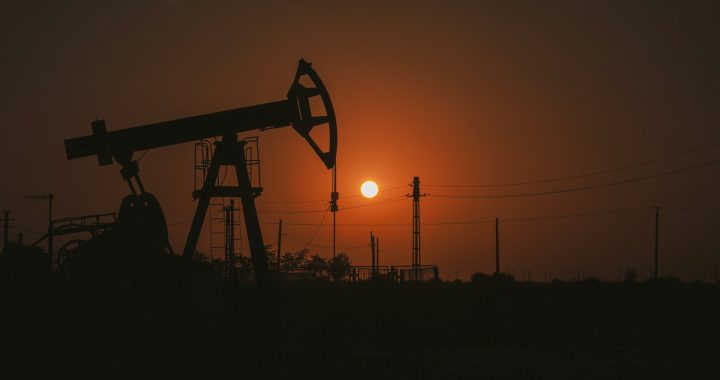
Thousands of miles away, Saudi Arabia’s Luberef is operating under a different set of pressures. As the kingdom pushes forward with its “Vision 2030” initiative—a massive effort to diversify its economy and boost non-oil exports—Luberef has become a key cog in the industrial engine. Yet, this high-stakes economic pivot is currently running into some stiff headwinds. June 2026 reports from the International Energy Agency highlight significant regional supply chain disruptions and a worrying drop in oil stockpiles, exacerbated by regional conflicts. Despite the faint optimism surrounding U.S.-Iran shipping agreements, the reality on the ground is that global oil supplies are tightening, with a projected 3.9 million barrel-per-day decline looming over the market.
For Luberef, the performance in the first quarter of 2026 has been a study in resilience. While top-line revenue growth was modest—rising just 1.4% to SAR 2.15 billion—the company managed to pull off an impressive surge in profitability. Net income climbed 16.2%, driven by favorable crack margins in side products that managed to cushion the blow from weaker performance in the core base oil business. This divergence between revenue and actual earnings highlights a company learning to optimize its margins even when the volume of base oil sales dips, as it did by 12% in the last quarter.
Investors, however, remain cautious. While the stock has seen a 20% gain over the past year, it still trades at a valuation that suggests some lingering skepticism about whether these margins are truly sustainable. The market seems to be playing a waiting game, keeping the price-to-earnings ratio well below the three-year average. Yet, the analyst consensus remains surprisingly bullish, pointing toward a 13.4% upside potential and bolstered by a dividend yield that offers a decent cushion for those willing to ride out the volatility.
Both firms are ultimately at the mercy of factors outside their immediate control. Whether it’s the geopolitical friction in the Middle East threatening to hike operational costs or the constant pressure of currency fluctuations and shifting trade regulations, the path ahead isn’t a straight line. Luberef, in particular, is navigating a reality where cash flow can swing wildly—dropping 51.5% in the first quarter—as the company balances heavy capital investment with the need to keep shareholders happy.
As we look toward the remainder of 2026, the contrast is stark. Energy Fuels is betting on the long-term necessity of critical minerals, while Luberef is betting on the transformation of the Saudi industrial base. Neither has it easy; both are playing a game where regulatory risks, supply chain bottlenecks, and the vagaries of global pricing dictate the tempo of their success. It’s an uneasy landscape, one where the only certainty is that the energy sector remains as fluid and unforgiving as ever.
 Divergent Paths in Hydrogen: Bloom Energy Rides the AI Wave While the Rest of the Sector Scrambles
  Germany’s Wind Energy Paradox: Grassroots Hustle Meets Offshore Headwinds
  Market Watch: Tech IPOs Heat Up for 2027 as Flutter Adjusts US Strategy
  Novavax Struggles with High Volatility and Long-Term Value Decline
  Global Real Estate Brief: Institutional Moves in Spain and NYC Financial Snapshot
  Intel’s Resurgence: Apple Rumors and Hardware Leaks Fuel Market Comeback
  Energy and Lubricants: Navigating a Shifting Global Landscape
  The Macro Setup: De-Risking the Supply Chain